

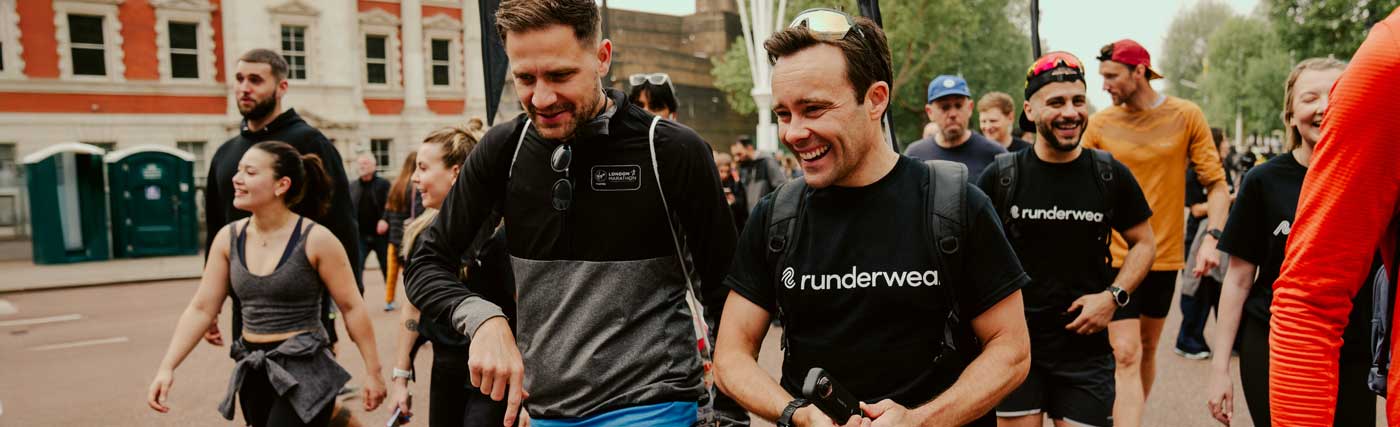
Starting running is simpler than most people make it. A pair of running shoes, comfortable kit, and 20 minutes of walk-run intervals three times a week is enough to build a lasting running habit. This guide covers everything from those first steps to choosing the right gear, avoiding common beginner mistakes, and building the kind of consistency that turns a hesitant first jog into a regular part of your life. Whether your goal is a parkrun, a 5K, or just getting off the sofa, every runner starts the same way, by walking out the door.
What Is the Best Way to Start Running as a Beginner?
The best way to start running is to walk first, then gradually add short intervals of running into your walks. No one goes from the sofa to a 5K in one session. I certainly didn't.
When I started running, I made the mistake most beginners make. I went out too fast, lasted about eight minutes, and spent the rest of the week with sore knees and zero motivation to try again. It took me a while to learn that the first few weeks of running are really about teaching your body to adapt, not testing how far you can push it.
A simple walk-run approach works. Start with 20 to 30 minutes, three times a week. Walk for two minutes, jog for one. Repeat. Each week, add a little more running and a little less walking. Within six to eight weeks, most people can run continuously for 20 to 30 minutes.
The Couch to 5K programme follows this exact structure and has helped millions of beginners build up gradually. It's free, and it works.
The key is patience. Your cardiovascular fitness improves faster than your joints and tendons can adapt. Running coach Kev Quin recommends increasing total weekly distance by no more than 10 percent per week. That rule exists because overuse injuries account for up to 80 percent of running injuries, according to research published in the British Journal of Sports Medicine.
How Often Should a Beginner Run Each Week?
Three times a week is the right starting point for most beginners. This allows at least one rest day between runs, giving your muscles, tendons, and joints time to recover and adapt.
I ran every day in my first week. By day five, my shins felt like they were made of glass. Rest days aren't laziness, they're where the adaptation happens. Your body gets stronger between runs, not during them.
A good beginner week looks like this:
- Monday: Run/walk session (20–30 minutes)
- Tuesday: Rest or gentle walk
- Wednesday: Run/walk session (20–30 minutes)
- Thursday: Rest or low-impact cross-training (swimming, cycling, yoga)
- Friday: Rest
- Saturday: Run/walk session (20–30 minutes)
- Sunday: Rest or gentle walk
Once you've been running consistently for eight to twelve weeks, you can add a fourth day. Rushing to five or six days too soon is where most beginners pick up injuries that set them back months.
Do I Need to Be Fit Before I Start Running?
No. Running is how you get fit, not something you do after you're already there. Starting from zero is completely normal. Most runners started exactly where you are.
That said, if you've been sedentary for a long time or have any pre-existing health conditions, a quick check with your GP before you start is a sensible step. This is especially true if you have joint issues, heart conditions, or are significantly overweight.
Walking is a perfectly valid starting point. If 30 minutes of brisk walking feels challenging, spend two to three weeks building that up before adding any running intervals. There's no rush. The goal is to still be running in six months, not to impress anyone in week one.
What Shoes Do I Need for Running?
A pair of proper running shoes is the single most important piece of kit for a new runner. Running in old trainers, fashion trainers, or shoes that don't fit correctly is the most common cause of beginner running injuries.
I’ve met someone that ran a few weeks in a pair of tennis shoes. His big toenail went black by week three. That was an easily avoidable mistake.
Running shoes differ from other trainers in three important ways: cushioning to absorb impact, support matched to how your foot moves, and fit that accounts for your feet swelling during a run. Most people need running shoes half a size larger than their everyday shoes.
The best approach is to visit a specialist running shop. Most offer free gait analysis, where they watch you walk or jog and recommend shoes that match your foot strike and pronation pattern. Shops like Runners Need, Up & Running, and Fleet Feet all offer this service.
A decent pair of beginner running shoes costs between £80 and £140. They last roughly 300 to 500 miles. At three runs a week of 3 miles each, that's around six to twelve months of running from a single pair.
What Should I Wear When Running?
Wear moisture-wicking fabrics that move sweat away from your skin. Avoid cotton, it absorbs sweat, stays wet, and creates friction against your skin during repetitive movement.
I learned this lesson on a damp October morning. Cotton t-shirt, regular boxers, and a 40-minute run. By the time I got home, the insides of my thighs were raw and my nipples looked like I'd lost a fight with sandpaper. It took three days to heal.
Your running kit checklist:
- Running shoes (fitted at a specialist shop)
- Moisture-wicking top (synthetic or merino wool)
- Running shorts or tights (without a liner, worn with running-specific underwear)
- Running socks (seamless, moisture-wicking, to prevent blisters)
- Sports bra (for women - fitted for high-impact activity)
- Running-specific underwear (seamless construction reduces friction at contact points)
You don't need to buy everything at once. Shoes first. Then build out the rest as you go. The kit that sits closest to your skin matters most, underwear, socks, and bra. These are where chafing and blisters start.
Runderwear's Men's and Women's Running Underwear is designed specifically for this. The seamless construction removes the seams that cause irritation during repetitive movement. Most beginners don't think about underwear until they've had a bad experience. Saving yourself that first chafing incident is worth the small investment.
For cold weather, layer up: a moisture-wicking base layer, a mid-layer for insulation, and a windproof outer layer. The most common beginner mistake in winter is overdressing. You warm up fast once you start moving. Dress for how you'll feel at mile two, not how you feel standing at your front door.
How Should I Warm Up Before a Run?
A good warm-up takes 5 to 10 minutes and prepares your muscles, joints, and cardiovascular system for the effort ahead. Skip the warm-up and you increase your risk of injury and make the first mile feel harder than it should.
Start with a brisk walk for 3 to 5 minutes. Then do dynamic stretches, movements that warm your muscles through motion rather than holding a position.
Effective pre-run dynamic stretches:
- Leg swings (forward and sideways): 10 each leg
- High knees: 30 seconds
- Butt kicks: 30 seconds
- Walking lunges: 10 each leg
- Ankle circles: 10 each direction
Static stretching, where you hold a stretch for 30 seconds, belongs after your run, not before. Research from the Journal of Strength and Conditioning found that static stretching before running can temporarily reduce muscle power and running economy.
What Running Form Should a Beginner Focus On?
Good running form means running tall, staying relaxed, and landing with your foot under your body rather than out in front of it. Overthinking your form as a beginner can do more harm than good, but a few simple cues make a real difference.
Three things to focus on:
Posture: Stand tall. Lean very slightly forward from the ankles, not the waist. Imagine a string pulling you up from the top of your head. Hunching over restricts your breathing and puts extra load on your lower back.
Arms: Relax your shoulders. Keep your elbows at roughly 90 degrees. Let your arms swing naturally forward and back, not across your body. Crossing the centre line of your body wastes energy and creates a twisting motion that your core has to fight against.
Feet: Land with your foot underneath you, not reaching out in front. Overstriding — landing with your foot well ahead of your centre of gravity, increases impact forces through your knees and shins. Shorter, quicker steps are gentler on your body.
Cadence (how many steps you take per minute) is a useful measure. Most elite runners land at around 180 steps per minute. Beginners typically start around 150 to 160. You don't need to force it higher, but if your cadence is below 150, shortening your stride slightly often helps.
How Do I Breathe Properly When Running?
Breathe through both your mouth and nose, and focus on exhaling fully rather than forcing air in. Your body is good at inhaling. Most beginners struggle because they're not letting enough air out.
A common test: if you can hold a short conversation while running, your pace is right. If you can only manage single words, you're going too fast. If you can sing, you could push a little harder.
Belly breathing (diaphragmatic breathing) is more efficient than shallow chest breathing. Your lungs are larger at the bottom. Breathing into your belly allows them to fill more completely. Practice this while walking first, put your hand on your stomach and feel it rise as you breathe in.
Some runners sync their breathing to their steps. A 3:2 pattern (three steps breathing in, two steps breathing out) works well at an easy pace. A 2:1 pattern works for harder efforts. This isn't a strict rule, find a rhythm that feels natural.
How Fast Should a Beginner Run?
Slow. Slower than you think. A pace where you can hold a conversation is the right effort level for most beginner runs. There is no minimum speed requirement to be a runner.
This was the hardest lesson for me to accept. I thought running slowly meant I was doing it wrong. The opposite is true. Running too fast too often is the single biggest reason beginners give up or get injured.
Easy running builds your aerobic base, the foundation that all future speed and endurance sits on. Research from exercise physiologist Dr Stephen Seiler shows that even elite athletes spend approximately 80 percent of their training time at conversational effort. Beginners have even more reason to keep it slow.
If you're using a GPS watch, ignore the pace number for the first two months. Focus on time and effort instead. Run for 20 minutes at a comfortable effort. The speed will come on its own.
How Do I Stay Motivated When Starting Out?
Motivation fades. Routine is what keeps you running. Build running into your schedule like an appointment you don't cancel, and the days you don't feel like going become much easier to manage.
I've been running for years and I still have mornings where I'd rather stay in bed. The difference now is that I know how I'll feel after the run, and it's always better than how I felt before it.
Strategies that work for beginners:
Set a specific goal: Sign up for a parkrun or a local 5K. Having a date on the calendar creates accountability. Parkrun is free, happens every Saturday, and welcomes walkers. Over 300,000 people take part in UK parkruns each week, according to parkrun's own data.
Run at the same time each day: Morning runners rarely skip sessions. The habit is already done before the day throws up reasons not to go.
Track your runs: A simple note on your phone or a free app like Strava or MapMyRun. Seeing weeks of consistency build up is surprisingly motivating.
Find a running partner: Social commitment is powerful. You're far less likely to skip a run if someone is waiting for you.
Follow the 10-minute rule: On days you really don't want to go, commit to just 10 minutes. If you still feel terrible after 10 minutes, stop. Most of the time, you'll keep going.
How Do I Avoid Injuries as a New Runner?
The most effective injury prevention strategy for beginners is progressive overload, increasing distance and intensity gradually, with adequate rest between sessions. Most beginner injuries come from doing too much too soon.
Running is a high-impact activity. Each foot strike generates a force of 2 to 3 times your body weight. Your cardiovascular system adapts in weeks. Your muscles adapt in weeks to months. Your tendons, ligaments, and bones take months to fully adapt.
Common beginner injuries and how to avoid them:
Shin splints: Pain along the front of the shin. Usually caused by increasing distance too quickly or running in shoes without adequate support. Reduce your weekly mileage and check your shoes.
Runner's knee: Pain around or behind the kneecap. Often linked to weak glutes and quadriceps. Strength training twice a week, squats, lunges, and glute bridges, significantly reduces the risk.
Plantar fasciitis: Sharp pain in the heel, worst first thing in the morning. Caused by overloading the plantar fascia. Calf stretches and gradual mileage increases help prevent it.
Blisters and chafing: Friction-induced skin damage caused by moisture and repetitive rubbing. Proper running socks eliminate most blister issues. Seamless running underwear removes the stitched seams that cause chafing at the inner thighs, waistband, and groin.
Strength training makes a measurable difference. A study published in the British Journal of Sports Medicine found that strength training programmes reduce overuse injuries in runners by up to 50 percent. Two sessions per week of bodyweight exercises, squats, lunges, calf raises, planks, and glute bridges, is enough for most beginners.
What Should I Eat and Drink Before a Run?
Eat a light snack 30 to 90 minutes before running, and make sure you're well hydrated before you start. Running on a completely empty stomach works for some people. Running on a full stomach works for nobody.
Good pre-run snack options:
- A banana
- A slice of toast with peanut butter
- A small handful of dried fruit and nuts
- A couple of oat cakes
Avoid high-fibre and high-fat foods immediately before running. They take longer to digest and can cause stomach discomfort.
For hydration, aim to drink 400 to 600 millilitres of water in the two hours before your run. If your run is under 60 minutes, water is all you need, sports drinks and gels are usually unnecessary at shorter distances.
After your run, refuel within 30 to 60 minutes with a combination of protein and carbohydrates. A glass of chocolate milk, a banana with yoghurt, or a simple meal with protein and carbs all work well.
How Do I Cool Down After a Run?
A proper cool-down takes 5 to 10 minutes and helps your heart rate return to normal gradually while reducing muscle stiffness. Stopping abruptly after running can cause blood to pool in your legs, making you feel lightheaded.
Walk for 3 to 5 minutes after your run to bring your heart rate down. Then do static stretches, holding each position for 20 to 30 seconds.
Key post-run stretches:
- Calf stretch (against a wall): 30 seconds each leg
- Quadricep stretch (standing, pulling foot to glutes): 30 seconds each leg
- Hamstring stretch (standing, foot on a low step): 30 seconds each leg
- Hip flexor stretch (lunge position, back knee down): 30 seconds each side
- Glute stretch (figure four, lying on your back): 30 seconds each side
Stretching after running, when your muscles are warm, is significantly more effective than stretching before. This is the time to hold positions and work on flexibility.
What Kit Do I Actually Need to Start Running?
You need running shoes, comfortable moisture-wicking clothing, and a good pair of running socks. Everything else is optional. The kit closest to your skin matters most.
Here's what I'd recommend for a complete beginner starter kit, in order of priority:
- Running shoes (properly fitted): £80–£140
- Running socks (seamless, moisture-wicking): £8–£15
- Running underwear (seamless construction): £18–£25
- Moisture-wicking top: £15–£30
- Running shorts or tights: £20–£40
- Sports bra (women): £25–£50
That's it. You don't need a GPS watch, a heart rate monitor, or compression socks in your first month. Those purchases can wait until running becomes a regular part of your life.
The one area where beginners consistently underinvest is the layer closest to their skin. Your shoes get all the attention, but your underwear and socks are where chafing and blisters happen. Runderwear's running boxers and running briefs use seamless construction specifically designed to eliminate friction during repetitive running movement. For women, a properly fitted running bra designed for high-impact forward motion makes a measurable difference to comfort on every run.
How Do I Build Up to Running a 5K?
A structured 8-week walk-to-run programme takes most beginners from zero to 5K. The Couch to 5K programme is the most widely used and is available as a free app from the NHS.
Here's a simplified 8-week progression:
-
Weeks 1–2: Alternate 1 minute running / 2 minutes walking for 20 minutes, three times per week
-
Weeks 3–4: Alternate 2 minutes running / 1 minute walking for 25 minutes
-
Weeks 5–6: Run 5 minutes / walk 2 minutes, repeat for 30 minutes
-
Weeks 7–8: Run 8–10 minutes / walk 1 minute, building toward 30 minutes continuous running
A continuous 30-minute run covers approximately 3 to 5 kilometres for most beginners, depending on pace. That's 5K distance.
Your first 5K event: parkrun is free, timed, and happens every Saturday morning at over 900 locations across the UK. There's no entry fee, no minimum pace requirement, and walkers are genuinely welcome. Over 9 million people have completed a parkrun event. It's the best possible introduction to running with other people.
FAQ
How long does it take to see results from running?
Most beginners notice improved energy and mood within the first two weeks of consistent running. Measurable cardiovascular fitness improvements typically appear within four to six weeks of running three times per week.
Can I run every day as a beginner?
Running every day as a beginner significantly increases the risk of overuse injuries. Three to four run days per week with rest days between sessions allows your body to adapt safely. Rest is where fitness gains happen.
Is it normal to feel out of breath when I start running?
Feeling out of breath during early runs is completely normal. It means you're asking your cardiovascular system to do something new. Slow down until you can hold a conversation. Fitness builds over weeks, not days.
Do I need to stretch before running?
Static stretching before running is not recommended. Dynamic warm-up movements, leg swings, high knees, butt kicks, prepare your body for running more effectively.
Static stretching belongs after your run, when your muscles are warm.
What's the best time of day to run?
The best time to run is whenever you'll do it consistently. Research shows slight performance advantages in the late afternoon, but the difference is negligible compared to the benefit of simply running regularly at whatever time suits your schedule.
Just remember to enjoy the process and have fun.



Leave a comment
All comments are moderated before being published.
This site is protected by hCaptcha and the hCaptcha Privacy Policy and Terms of Service apply.